

Making Small Spaces Easier to Navigate
There’s a moment many people don’t talk about out loud.
Maybe it’s bumping into furniture more often.
Maybe it’s feeling nervous walking through a narrow hallway at night.
Maybe it’s realizing the bathroom suddenly feels tighter than it used to.
Or maybe it’s the quiet frustration of thinking:
“How did my own home start feeling difficult?”
For people living in apartments, condos, smaller homes, or even cozy family spaces filled with years of memories, everyday movement can slowly become more stressful than comfortable.
And when things start feeling harder, most people don’t know where to begin.
That’s usually where the overwhelm starts.
Too many products.
Too many opinions.
Too much confusing advice.
At CareWay Living, we believe making your home easier to navigate should feel calming — not complicated.
The goal is not turning your home into a medical space.
The goal is helping you feel comfortable, confident, and safe moving through your everyday life again.
Why Small Spaces Can Start Feeling More Difficult
Smaller homes often work beautifully — until mobility, balance, recovery, fatigue, or aging changes how someone moves through them.
Things that once felt minor suddenly become daily frustrations:
-
Tight corners
-
Narrow walkways
-
Cluttered pathways
-
Low furniture
-
Hard-to-reach storage
-
Small bathrooms
-
Limited turning space
-
Rugs or uneven flooring
-
Heavy doors
And what makes this emotionally difficult is that many people feel embarrassed admitting it.
They start avoiding certain rooms.
They move slower.
They stop carrying things altogether.
They begin second-guessing simple movements.
Over time, confidence shrinks before the space itself ever changes.
That’s why small adjustments can make such a meaningful difference.
Start With Ease — Not a Full Home Overhaul
One of the biggest misconceptions is thinking you need to completely redesign your home overnight.
You don’t.
Most people benefit far more from a few thoughtful changes than a massive, overwhelming remodel.
The best place to start is simply asking:
“Where does daily life feel harder than it should?”
Usually, the answer appears quickly.
Maybe it’s getting in and out of bed.
Maybe it’s navigating the bathroom safely.
Maybe it’s moving from the kitchen to the living room with a walker.
Start there first.
Small wins build confidence.
Clear the Walking Path First
Before buying anything, focus on creating easier movement throughout the home.
This alone can dramatically reduce stress and improve comfort.
Helpful adjustments may include:
-
Removing unnecessary side tables
-
Widening walking paths between furniture
-
Securing loose rugs
-
Reducing floor clutter
-
Improving lighting in narrow spaces
-
Rearranging furniture to create smoother turns
-
Keeping frequently used items easier to reach
For smaller homes especially, simplicity often creates the biggest feeling of relief.
Many people are surprised how much calmer a space feels after removing just a few obstacles.
Choosing Mobility Support for Smaller Homes
This is where many people become overwhelmed.
Not every mobility solution fits every living space.
A product that works beautifully in a large home may feel frustrating in a tighter apartment or condo.
That’s why lifestyle fit matters just as much as product features.
For smaller homes, portability and maneuverability often matter most
This may be a better fit if:
-
You have narrow hallways
-
You need tighter turning capability
-
Storage space is limited
-
You travel frequently
-
You need something lightweight
-
You live in an apartment or condo
In many cases, compact rollators, foldable walkers, slim-profile lift chairs, or travel-friendly mobility scooters can feel much easier to live with day-to-day.
Not because they are “better.”
Because they fit your actual life better.
That distinction matters.
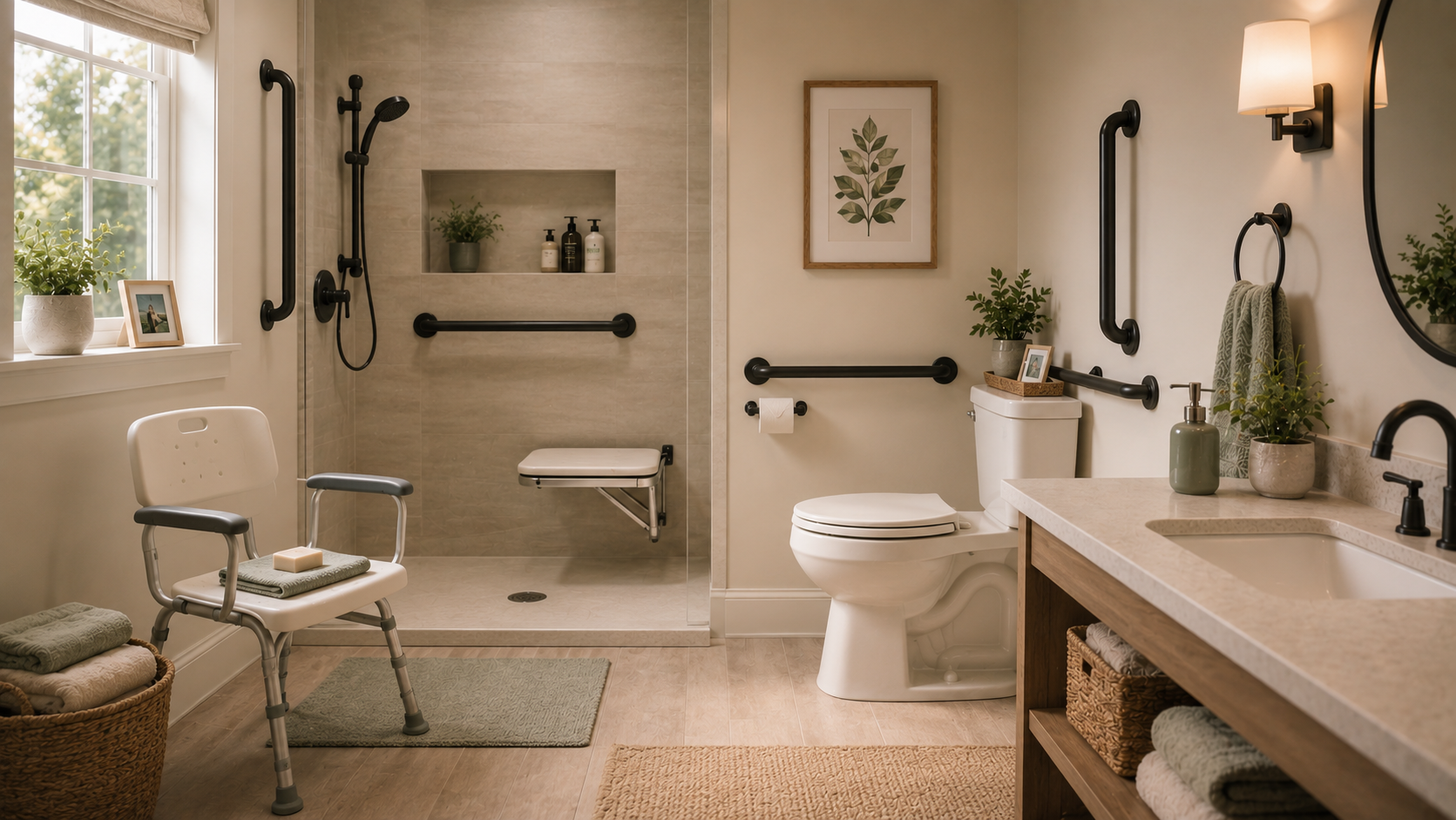
Bathroom Spaces Often Need the Most Attention
Bathrooms are one of the most common stress points in smaller homes.
They’re also where many falls happen.
And yet, people often wait far too long to make adjustments because they worry the space will start looking clinical or institutional.
The good news is that today’s safety solutions can feel much more thoughtful and discreet than people expect.
Simple additions can make everyday routines feel dramatically safer:
-
Grab bars near the toilet or shower
-
Shower chairs for stability
-
Handheld shower heads
-
Raised toilet seats
-
Non-slip flooring solutions
-
Compact transfer benches for tighter layouts
The goal is not making someone feel dependent.
The goal is reducing fear during everyday routines.
That emotional difference changes everything.
Furniture Placement Matters More Than People Realize
Sometimes the issue isn’t mobility equipment at all.
Sometimes the room simply no longer supports how someone moves.
For example:
-
Chairs that sit too low become harder to stand from
-
Sharp furniture corners create difficult turning points
-
Overcrowded rooms increase hesitation and instability
-
Poor spacing makes walkers harder to use comfortably
For smaller homes, intentional spacing matters.
A room does not need to feel empty.
It just needs to feel navigable.
That feeling of being able to move naturally again often restores confidence faster than expected.
If Portability Matters Most
Many people living in smaller spaces also need flexibility.
Maybe equipment needs to fold away.
Maybe it needs to fit in a vehicle.
Maybe multiple family members share the same space.
If portability matters most, lightweight and foldable options are often worth prioritizing.
This may be especially helpful for:
-
Apartment living
-
Shared homes
-
Frequent travel
-
Smaller storage areas
-
Temporary recovery situations
-
Caregivers managing limited space
The best setup is usually the one that feels easiest to live with consistently.
Not the one with the longest feature list.
Reducing Emotional Overwhelm Matters Too
One thing people rarely talk about is how emotionally exhausting these changes can feel.
When movement becomes harder, even simple decisions suddenly carry pressure.
People worry about:
-
Making the wrong purchase
-
Losing independence
-
Their home “looking medical”
-
Becoming a burden
-
Spending money on the wrong solution
That’s why guidance matters.
Not pressure.
Not hype.
Not being pushed toward the most expensive option.
Just clear, calm support.
Because most people don’t need more confusion.
They need reassurance that easier living is possible.
Creating a Home That Supports Everyday Independence
At its core, this is not really about equipment.
It’s about daily life.
It’s about:
-
moving through your home comfortably
-
feeling steadier
-
reducing stress
-
keeping your routines
-
maintaining confidence
-
protecting independence
And often, the smallest changes create the biggest emotional relief.
A clearer hallway.
A safer bathroom setup.
A chair that’s easier to stand from.
A walker that actually fits the space properly.
Those things may seem small from the outside.
But inside someone’s everyday life, they can change everything.
You Don’t Have to Figure It Out Alone
If your home has started feeling harder to navigate, that does not mean you’ve failed.
It simply means your environment may need to evolve alongside your needs.
And that’s more common than people realize.
The important thing is starting before frustration turns into isolation, fear, or injury.
One simple adjustment at a time is enough.
Because the goal is not perfection.
The goal is helping life feel easier again.
Next Steps
If you’re unsure where to begin, CareWay Living can help you compare options based on your space, lifestyle, comfort needs, and everyday routines.
You can also:
-
Explore compact mobility solutions
-
Read additional home safety guides
-
Compare portable support options
-
Ask Lyro for personalized guidance
-
Contact CareWay Living for help choosing the right fit
Because you don’t need another confusing product.
You need clarity, comfort, and support that actually fits your life.
Suggested Internal Linking Opportunities
-
“How to Make a Bathroom Safer Without Remodeling”
-
“Choosing the Right Walker for Everyday Living”
-
“Signs Your Home May Need Accessibility Adjustments”
-
“Mobility Solutions for Apartment Living”
-
“How to Stay Independent Longer at Home”
-
“What to Look for in a Travel-Friendly Mobility Scooter”
-
“Simple Home Changes That Reduce Fall Risk”
-
“When Everyday Tasks Start Feeling Harder”

Written by Angie Cruz